Others
- Improving Water Quality: Water Changes, Filter Cleaning
- Salt: 1–2 g/L in freshwater
- Malachite Green: Effective in the Bathroom
- It usually disappears as water conditions improve
Schistocephalus / Diplostomum (Parasitic clouded eye)
Classification: Digenean trematode (requires birds as definitive hosts) Water: Freshwater Symptoms:
- Cataracts or cloudiness in one or both eyes
- Progressive blindness
- The fish may have a good appetite but swim poorly Cause: The parasite's metacercariae form cysts in the lens Vector: Aquatic snails are the primary intermediate host. The released cercariae infect fish. Treatment: There is no effective treatment. The affected eye will not recover. Remove intermediate snails. Without birds defecating in the aquarium, the life cycle is not completed.
Camallanus (Red Intestinal Worms)
Classification: Intestinal nematode (Camallanidae) Water: Freshwater (rare in marine environments) Symptoms:
- Red worms 1–3 cm long visible emerging from the fish's anus
- Slightly swollen abdomen
- Weight loss, loss of appetite
- Whitish or mucus-containing stool Cause: Intestinal parasitic nematode Transmission: Ingestion of infected copepods (vector), feces from infected fish
Treatment:
- Levamisole: 10–12 mg/L in the aquarium or medicated food. It paralyzes the worms. Repeat after 14 days to treat newly hatched larvae.
- Fenbendazole: In medicated feed. Alternative.
- Metronidazole: Less effective against Camallanus than against other parasites.
- Treat the ENTIRE aquarium, not just the fish that are visibly affected.
Planarians (Turbellaria)
Classification: Free-living flatworms (Planariidae) Water: Mainly freshwater (Planaria tigrina in freshwater; in saltwater: Polyclad Flatworms) Sweet symptoms:
- White or brown flatworms, 3–10 mm long, visible on the glass and substrate
- They aren't fish parasites per se, but they proliferate excessively when there is an abundance of food
- They can attack fish eggs Marine Symptoms (Polyclad Flatworms):
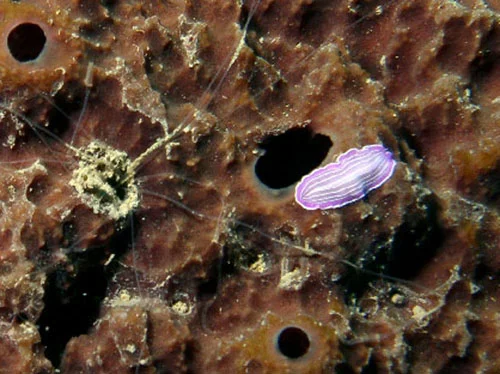
- Colorful flatworms on corals (especially on Euphyllia)
- The worms feed on coral tissue
- The affected colonies show bleached areas
Sweet treat:
- Fenbendazole: 1 mg/L in a quarantine tank or a tank without invertebrates
- Predatory fish: Gourami, Clown loach
- Trap: Plate with food at night → remove with planarians at dawn
Marine treatment:
- Salifert Flatworm Exit: Effective but releases toxins from dead worms → perform a massive water change before treatment
- Freshwater dip: For individual corals (30–60 seconds)
- Nudibranchs of the genus Chelidonura: Specialized predators of marine flatworms
ADDITIONAL BACTERIAL DISEASES
Streptococcosis (Streptococcus iniae / agalactiae)
Fish: Mainly saltwater and freshwater fish (tilapia, sea bass) Symptoms:
- Exophthalmos (bulging eyes)
- Bleeding on the fins and skin
- Swimming in Circles (Neurological)
- Bloated Abdomen
- High mortality rate Treatment: Florfenicol, erythromycin, and amoxicillin in medicated feed. Difficult to treat. Zoonosis: S. iniae can infect humans with open wounds (cellulitis, arthritis). Wear gloves.
Bacterial Ulcers in Pond Fish (Aeromonas ulcerans)
Water: Freshwater, especially ponds