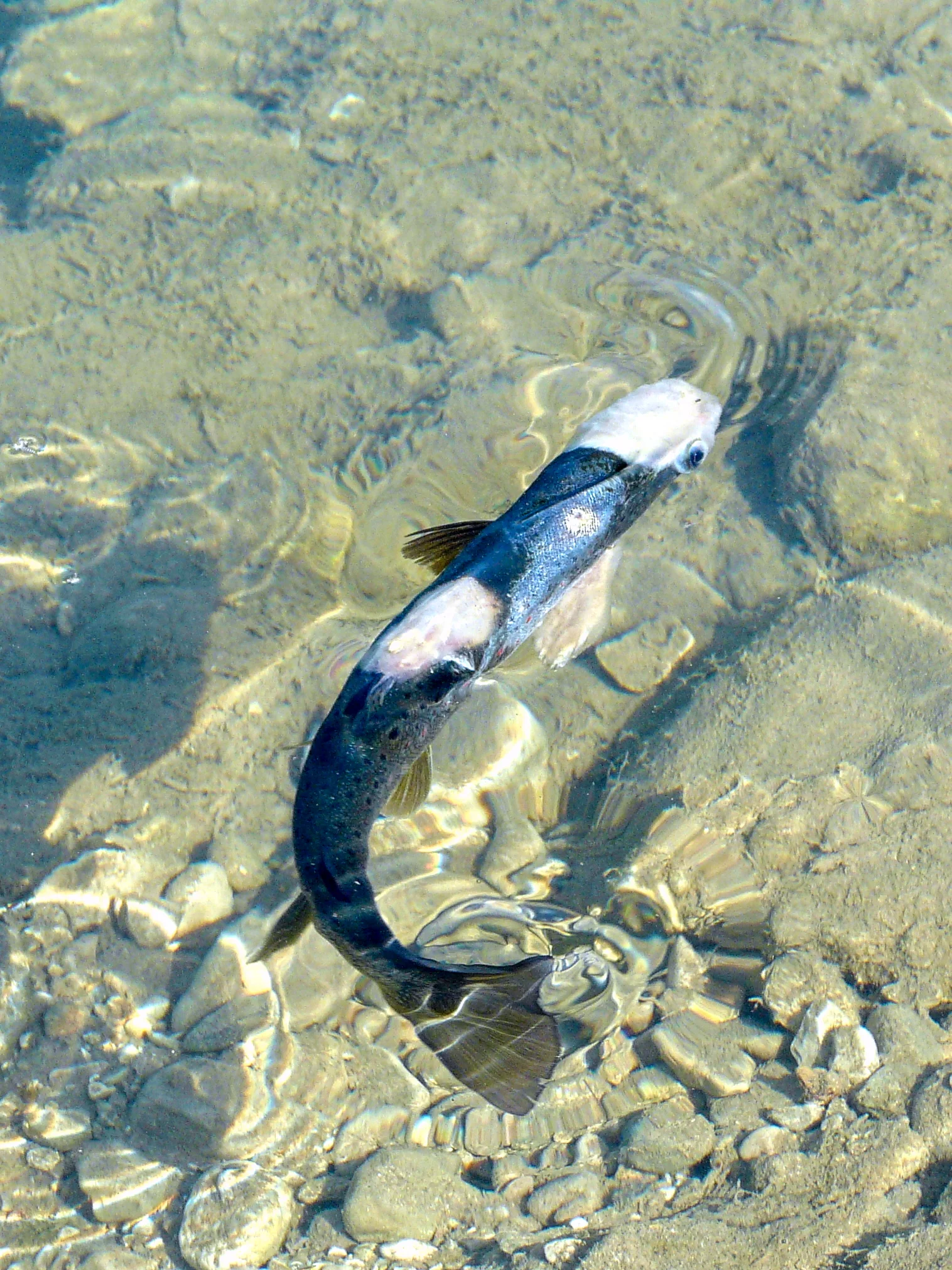
Fungi
Primarily affects: Paracheirodon innesi (common neon tetra) Treatment: Incurable. Euthanize affected fish to prevent the spread of the disease.
COMMON PROBLEMS (NOT DISEASES)
Ammonia/Nitrite Poisoning
Symptoms: Reddish gills, gasping at the surface, erratic behavior Solution: Immediately change 30–50% of the water; use Seachem Prime as an emergency measure; investigate the source of the ammonia
Edema / Ascites (raised scales)
Symptoms: Scales raised like a pineapple, swollen abdomen Cause: Fluid accumulation. Indication of organ failure (kidneys). Often bacterial. Treatment: Antibiotic in food + Epsom salt (MgSO₄) as a diuretic (1 g/L) — prognosis uncertain
Swim Bladder Disease
Symptoms: Fish swimming on its side, unable to dive or unable to rise to the surface Causes: Overfeeding, constipation, bacterial, genetic (in veiltail goldfish) Solution: Fast for 2–3 days, eat a diet of cooked, peeled peas (for constipation), and take antibiotics if the cause is bacterial
MARINE PARASITIC DISEASES (enlarged view)
Brooklynella hostilis
Classification: Ciliated protozoan (order Dysteriida) Water: Exclusively seawater Symptoms:
- Excess mucus in the body and gills (viscous appearance)
- Scraping against rocks and invertebrates
- White or gray patches on the skin (not spherical bumps like Ich)
- Very rapid breathing, gasping
- Loss of appetite
- Skin that peels off in patches
- Death within 24–48 hours if left untreated — FASTER THAN MARINE ICH Organisms most affected: Especially clownfish (Amphiprion spp.) — formerly known as "Clownfish Disease." It also affects other species. Differential diagnosis: Progresses more rapidly than Ich, irregular spots (not spherical lesions), copious mucus, affects the gills first. Life cycle: It lives inside the fish (ectoparasite). It reproduces by binary fission directly within the host.
Treatment:
- Formalin (37% formaldehyde): The most effective treatment. A 30-minute bath in seawater at 0.125–0.25 mL/L (with vigorous aeration), or continuous treatment at a very low dose (0.025 mL/L). Extreme caution is required regarding the concentration.
- Freshwater dip: Immerse the fish in freshwater at the same temperature for 5 minutes—this kills many ectoparasites, including Brooklynella. It is stressful for the fish but effective as a treatment.
- Immediate quarantine: Don't wait. Brooklynella kills within hours.
- Copper is less effective against Brooklynella than against Ich. Safety: Formalin is toxic to humans (carcinogenic)—use with proper ventilation, gloves, and eye protection. NEVER use formalin in an aquarium containing invertebrates or live rock.