Materials
MATERIALS AND SUBSTRATES
Rocks
| Type | Features | Effect on water |
|---|---|---|
| Seiryu Stone | Bluish gray, white veins | KH and pH increase (calcareous) |
| Dragon Stone (Ohko) | Brown with irregular holes | KH rises slightly |
| Lava Rock | Black/reddish, very porous | No effect or minimal effect |
| Yamaya Stone | Light gray with cracks | Upload KH |
| Pagoda Stone | Horizontal stacking | Upload KH |
| Stone Heel | White, with obvious calcareous deposits | KH is rising sharply — exercise caution |
| Limestone / Marine limestone | White/cream | KH and pH rise significantly |
Vinegar test: Pour a few drops of vinegar onto the rock. If it bubbles → it contains calcium/carbonates → the KH will rise. No bubbles → inert.
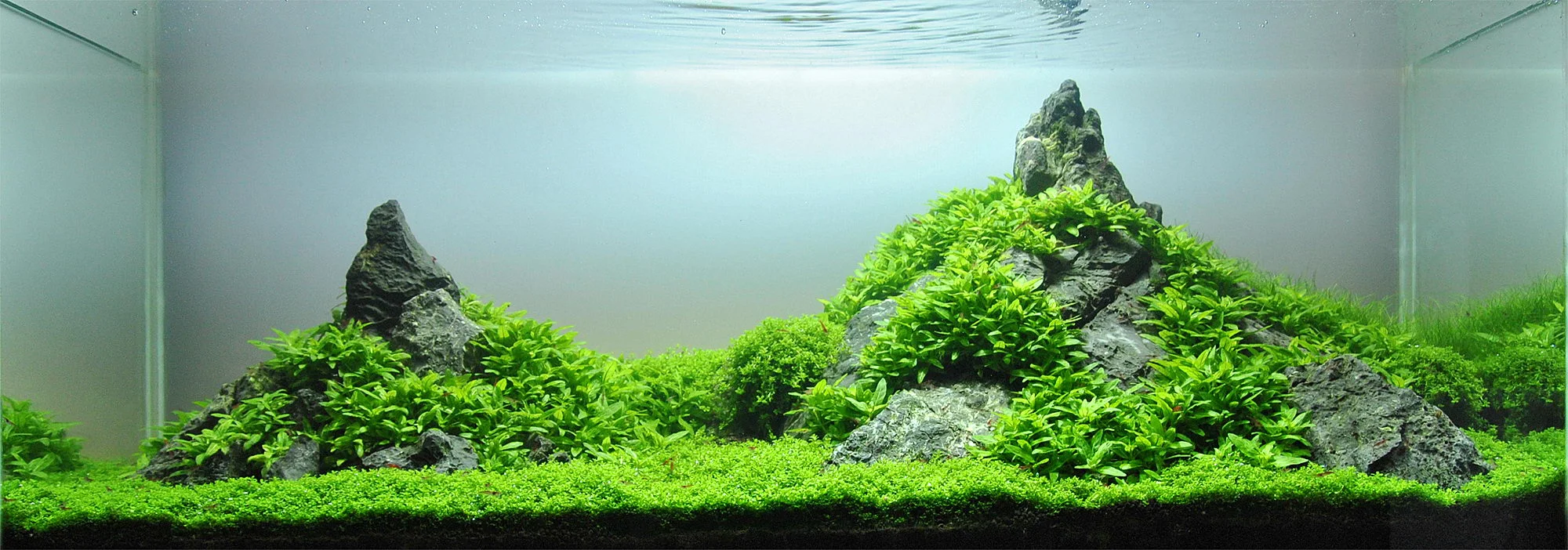
Rockscaping: Rocks from the same family or color look more natural than a mix of different types.
Wood
| Type | Features |
|---|---|
| Pagoda Root / Mopani | Dense, it settles on its own, releasing moderate tannins |
| Malay (Malaysian) Root | Natural, winding shapes |
| Spider Root / Bonsai | Thin branches ideal for moss and ferns |
| Cholla Wood | Tubular, porous, decomposes in 1–2 years |
| Bamboo stalks (preserved) | Modern ones don't let much out |
| Bogwood Root | Aged swamp wood — very dark, high tannin content |
Wood Preparation:
- Boil or soak for several weeks (to remove fungi and tannins)
- During the first few months, some tannin will be released (yellowish water) → normal, not harmful
- If it floats → tie it to a rock or a weighted bucket until it becomes saturated
Mold on new wood: The white mold that appears on new wood is normal (surface cellulose). Any fish will eat it. It goes away on its own in 1–2 weeks.
Substrates
For planting:
| Substrate | Features |
|---|---|
| ADA Aqua Soil Amazonia | The gold standard. Active — acidifies and softens. Releases ammonia at the start. |
| Tropica Aquarium Soil | Similar to ADA. Very popular in Europe. |
| Fluval Stratum | For Caridina shrimp and planted tanks. More affordable. |
| JBL ProScape | Active, good buffering capacity |
| Controsoil (Up Aqua) | Affordable, functional |
| Peat bed | Natural, makes it acidic, but impractical |
| Fine sand (0.1–1 mm) | Inert, ideal for Corydoras and shrimp |
| Aquarium gravel | Not nutritious, just decorative for aquascaping |
Active substrate: Releases nutrients, acidifies, and softens the water. Essential for Caridina. It depletes in 12–18 months (loses its buffering capacity) → for shrimp, it must be replaced.
Inert substrate: Quartz sand, aquarium gravel. Does not affect water parameters. For Neocaridina, African cichlids, and goldfish.
Recommended depth: 5–8 cm in a planted tank (Echinodorus has deep roots that need space). Minimum 3 cm.