Oviparous
REPRODUCTION OF OVIPAROUS ANIMALS
Tetras and Cypriniformes (scattered eggs)
Process:
- Males chase females
- The female lays eggs among the plants, and the male fertilizes them as he passes by
- Parents do NOT care for the eggs or the young—they eat them if they can
- The eggs hatch in 24–48 hours
- The larvae remain motionless for 2–3 days, absorbing the yolk sac.
- They begin to swim and eat freely
To breed tetras at home:
- Small breeding tank (10–20 L) with no substrate and very little light
- Artificial substrate (wool mop, nylon mesh) or dense plants where the eggs can fall
- Soft, acidic water (osmotized with a pH of 6.0–6.5) — stimulates reproduction
- Add one plump female + 2 males
- Remove the parents immediately after laying
- Total darkness — tetra eggs are sensitive to light
Corydoras
Process:
- The female collects the male's sperm with her mouth
- It carries the sperm through its gills to the pelvic fins in a "pouch"-like structure
- It lays a few sticky eggs on the glass, plants, or decorations
- Repeat the process several times over the course of 1–2 hours
- The eggs hatch in 3–5 days
Stimulation:
- Partial water change with cooler water (simulates seasonal rain)
- Temperature drop of 2–4°C
- Eat heartily in the days leading up to the event
Larval rearing:
- Remove the eggs from the main aquarium (including scales and plants with eggs on them)
- Incubate in a container with gentle aeration and a few drops of methylene blue (antifungal agent)
- The larvae eat infusoria, Artemia nauplii, and fry meal.
Cichlids (Guardians and Caregivers)
Cichlids make exceptional parents.
Substrate-dwelling cichlids (Apistogramma, Discus, Scalara)
Process:
- The couple forms a bond (courtship)
- They clean a surface (rock, leaf, ceramic): the laying substrate
- The female lays 50–500 eggs
- Both (or just the female) will fan them with their fins and remove unfertilized eggs or fungus.
- When the larvae hatch, the parents move them to "holes" they have dug
- Within 5–10 days, the young are swimming on their own, but their parents continue to protect them
- Duration of care: 2–6 weeks, depending on the species
Discus — special case: The young feed on their parents' slime coat during the first two weeks. It is essential not to separate the family.
African mouthbrooding cichlids
Process:
- The male digs a nest in the sand
- He woos the female with dances
- The female collects the eggs in her mouth
- She continues to collect eggs that the male fertilizes (the spots on the male's anal fin mimic eggs)
- The female incubates the eggs for 21–28 days WITHOUT EATING
- When releasing her young, the female takes them back into her mouth if she senses a threat
Care during breeding:
- The brooding female may be harassed—isolate her
- Remove the fry after 2–3 weeks in the breeding tank (remove the female; the fry will come out of her mouth)
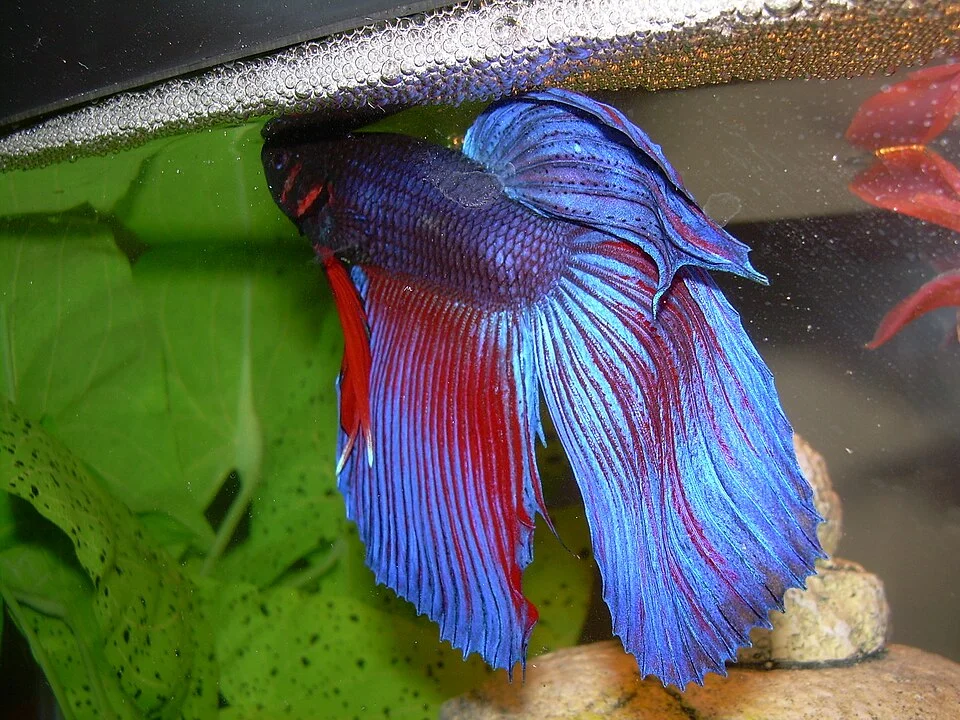
Betta splendens
Process:
- The male builds a bubble nest on the surface (under a floating leaf)
- Courts the female (spreading fins, vivid colors, chasing)
- The male embraces the female (amplexus)
- The eggs float to the surface; the male picks them up with his beak and carries them to the nest
- Repeated mating until 300–500 eggs are laid