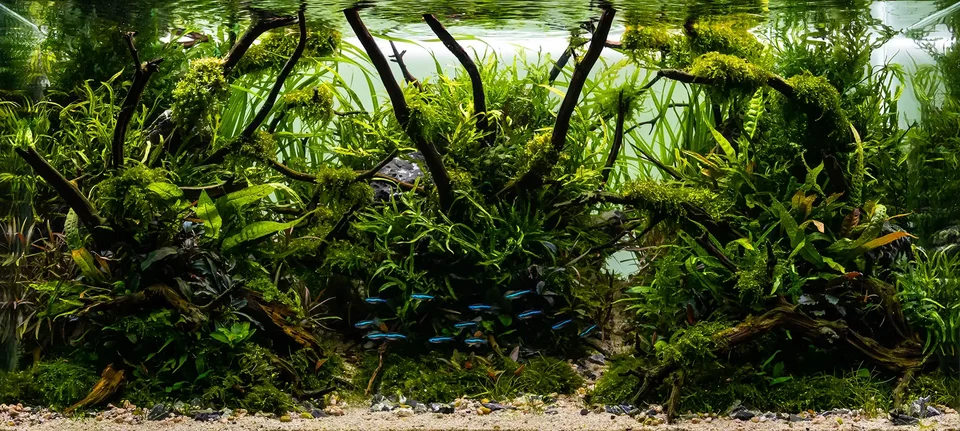
Lighting
Technologies
T5 and T8 Fluorescent Lights (Traditional Technology)
- High-Power T5: Excellent for planted and marine setups
- Uniform linear spectrum: good coverage in long aquariums
- It uses more power than LEDs but has excellent spectral quality for corals
- They degrade over time → replace the tubes every 9–12 months
LED
- Low power consumption, long service life (50,000 hours)
- Brightness and spectrum control (dimmer, scheduling)
- Technology dominates today's market
- Quality varies greatly → buy specific aquarium brands
Metal Halide (metal halides)
- An old but effective technology for SPS corals and anemones
- Very hot → needs a chiller
- Mostly replaced with high-quality LEDs
Light cycle (photoperiod)
Tropical freshwater:
- 8–10 hours of daylight per day
- Simulate sunrise and sunset (30–60-minute ramp)
Planted aquarium:
- 8–10 hours of intense light
- That's all it takes to prevent excessive algae growth
Reef fish:
- Complex cycle: blue/white/UV
- Sunrise: a blue gradient 2 hours before white
- 8–10 hours at maximum intensity
- Sunset: Reverse Ramp
- Night: moonlight (very faint blue)
PAR Index — Measurement of Photosynthetic Light
Instrument: PAR meter (quantum probe) — Apogee, Seneye, Licor Approximate values:
| Aquarium Area | PAR for Plants | PAR for soft corals | PAR for SPS |
|---|---|---|---|
| Area | 100-200 | 100-300 | 300-600 |
| Medium | 50-100 | 75-200 | 200-400 |
| Background | 20-50 | 30-100 | 100-250 |