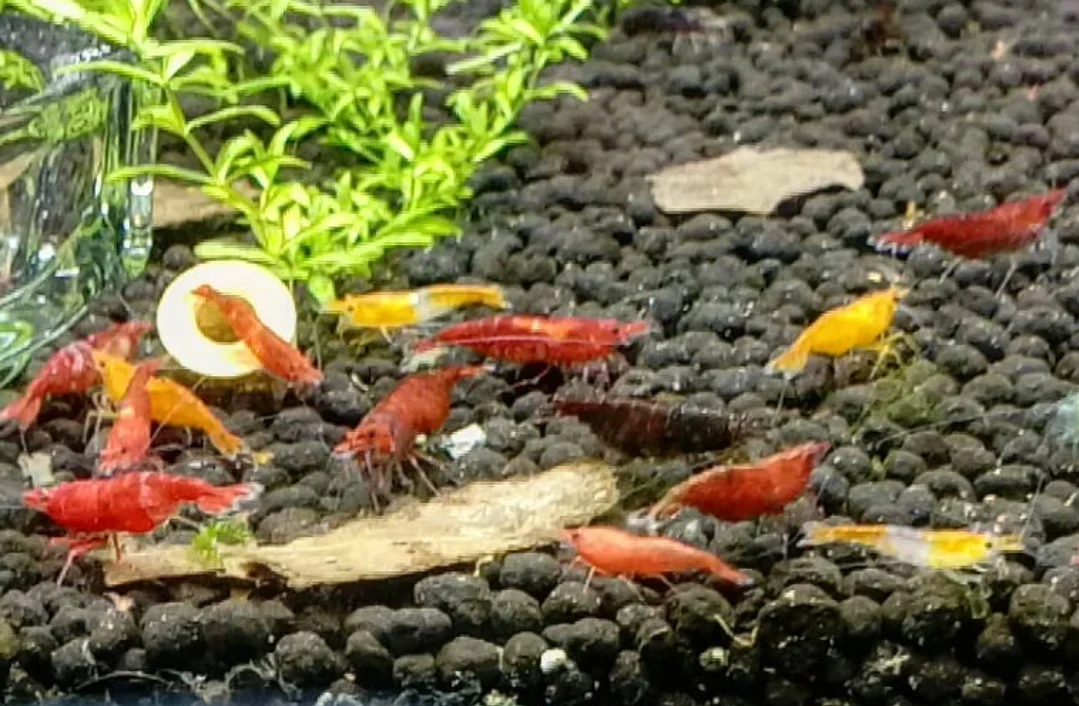
Shrimp
Biology of Aquarium Shrimp
Life Cycle
- Eggs: The female carries the eggs under her abdomen (between her pleopods) for 3–5 weeks
- Larvae: They hatch as tiny replicas of the adult (there is no pelagic larval stage, as seen in farmed marine shrimp)
- Juveniles: They grow to adulthood in 6–10 weeks
- Adult: 1–2 years of life in Neocaridina; they can reproduce throughout their lives
Molting (ecdysis)
Shrimp have a chitin exoskeleton that does not grow → they must molt in order to grow.
Process:
- They stop eating 1–2 days beforehand
- They secrete enzymes that dissolve the inner layer
- They hide and pull the body out from the back
- New soft layer → highly vulnerable for 12–24 hours
- Calcium Hardening of Water
Molting problems:
- Failed molt / Stuck molt: The shrimp cannot fully emerge → it dies
- Causes: Low GH, low Ca, unstable KH, toxins in the water (copper)
- The hormone crustecdisone regulates the cycle; copper disrupts it
Sexual Differentiation
- Female: larger, rounded abdomen (for carrying eggs), generally more vivid color
- Male: smaller, straight abdomen, shorter tail
- Mature female: the "saddle" is visible (a spot on the back where the eggs form before fertilization)