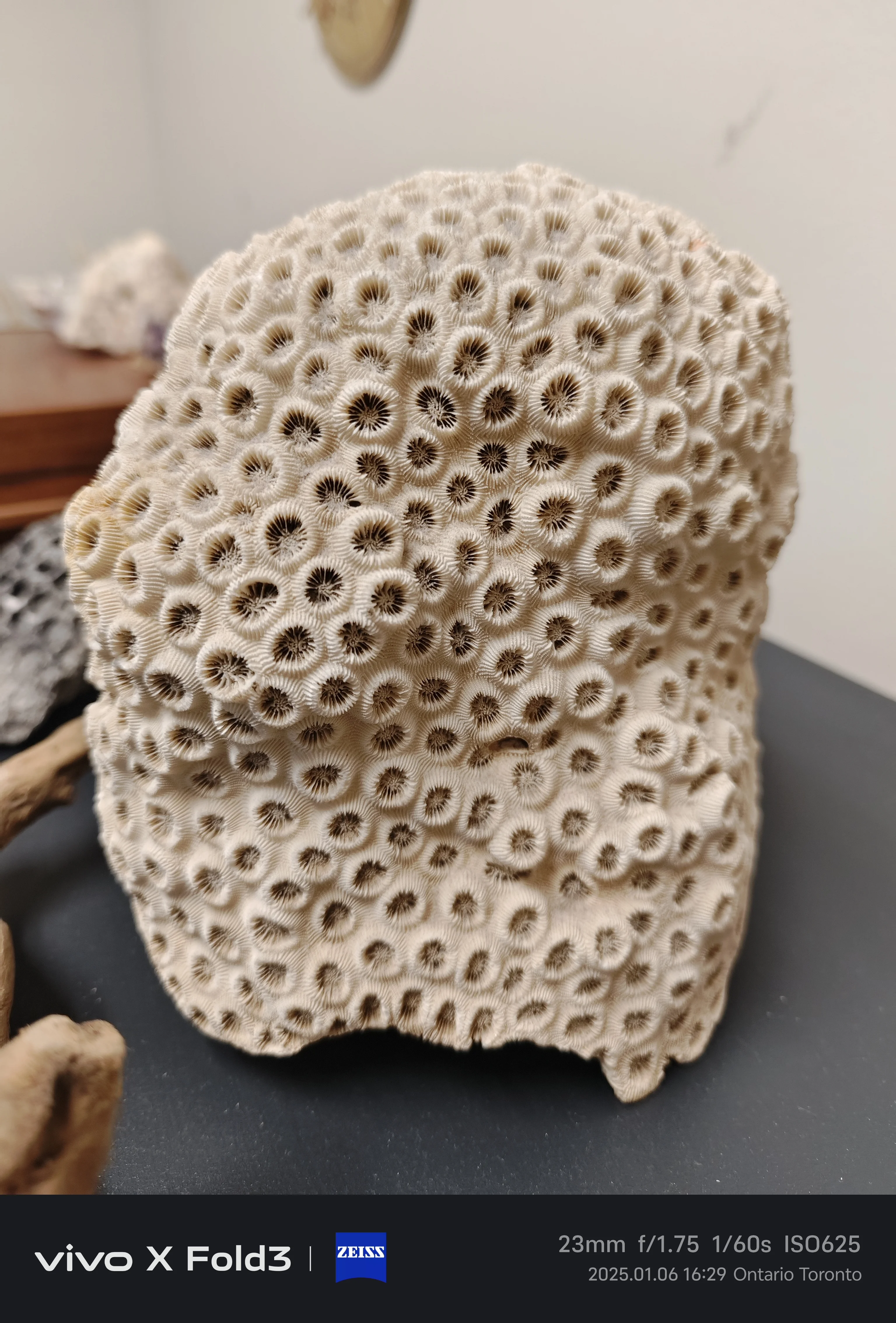
Corals
Coral Biology
What are corals?
Corals are animals (Cnidaria, class Anthozoa) that live in symbiosis with photosynthetic algae called zooxanthellae (Symbiodinium sp.). Zooxanthellae:
- They live inside the coral tissue
- They perform photosynthesis → they provide up to 90% of the coral's energy
- They give the coral its color
Coral Bleaching
When a coral is stressed (high temperature, intense light, pollution), it expels its zooxanthellae → loses its color → has no photosynthetic energy → and may die.
Types of Corals by Requirements
SPS (Small Polyp Stony) — Small-polyp stony coral
- Examples: Acropora, Montipora, Pocillopora, Stylophora
- High light, high current
- Highly sensitive to parameters (NO3 <5, PO4 <0.05)
- For Advanced Aquarists
LPS (Large Polyp Stony) — Large-polyp stony coral
- Examples: Favia, Acanthastrea, Hammer, Blastomussa, Goniopora, Trachyphyllia
- Moderate light and electricity
- More tolerant of fluctuations
- Good for beginners in choir singing
Soft Corals
- Examples: Zoanthus, Palythoa, Sarcophyton, Xenia, Clavularia
- Very tolerant, without a calcareous skeleton
- They do not require such strict Ca/Alk monitoring
- Perfect for beginners in sailing
Calcification
SPS and LPS corals form aragonite (CaCO₃) skeletons. They require:
- Calcium: 380–450 ppm
- Alkalinity: 8–12 dKH
- Magnesium: 1200–1400 ppm (important to prevent Ca and KH from precipitating)