Dinoflagellates
Dinoflagellates (Dinos)
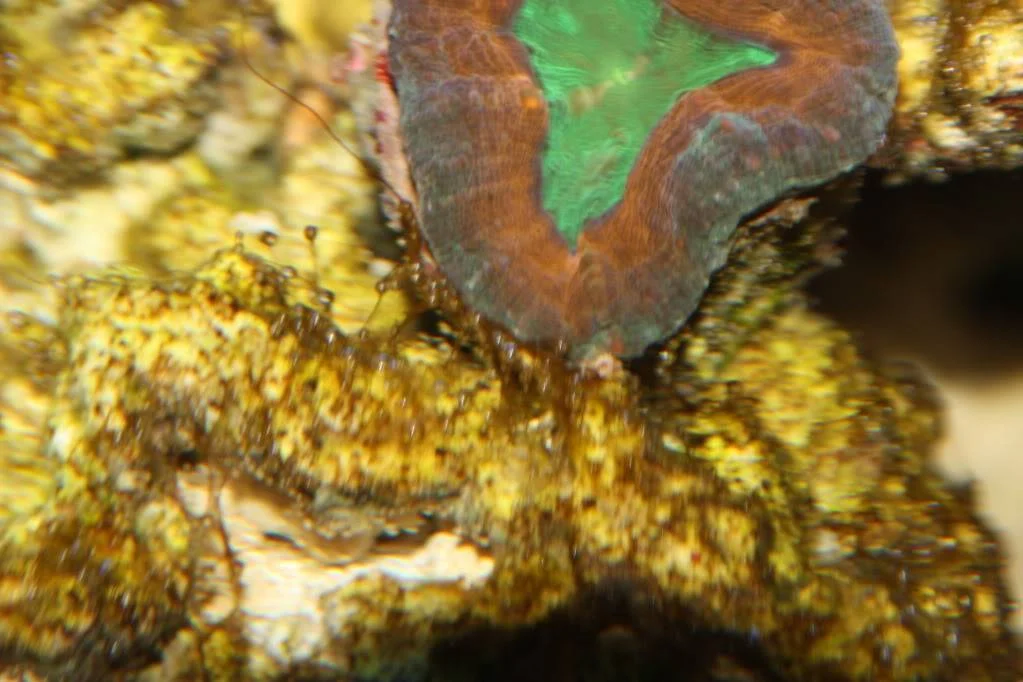
Scientific name: Symbiodinium sp., Ostreopsis sp., Prorocentrum sp., Amphidinium sp. Taxonomic group: Dinoflagellata (mixotrophic protists) Water: Exclusively seawater Color: Golden brown, golden yellow, greenish-brown, sometimes with bubbles Texture: Mucilaginous, with a mucus- or slime-like appearance. Forms characteristic gas bubbles.
Appearance: A brownish-golden, viscous, mucilaginous film that covers the substrate, rocks, and corals. Diagnostic feature: It produces gas bubbles trapped within the film. When the water is agitated, brown strands can be seen breaking off. It has a typical “wet earth” odor or an unpleasant smell.
Where is it found?: Substrate (especially sand), live rock, coral bases. It prefers areas with bright light and little current.
Is it dangerous?:
- Highly dangerous in severe outbreaks: Some genera (Ostreopsis, Gambierdiscus) produce palitoxins, ciguatoxins, and other toxins that can kill fish, invertebrates, and corals within a few hours.
- It inhibits coral growth by covering them.
- Toxins in the air (marine aerosols) can cause respiratory irritation in people.
- It is possibly the most serious problem that can occur in a home reef tank.
Related parameters:
- Very low nutrient levels (ultra-oligotrophic): Paradoxically, Dinos appear when the system has VERY few nutrients. NO₃ < 1 ppm and PO₄ < 0.01 ppm are warning signs.
- High levels of silicates: They nourish certain genera
- Intense light: High-irradiation zone
- High pH: > 8.3 during the day
- Areas with little current: Substrate with no movement
Main causes:
- Ultra-clean system with virtually no nutrients — the "too clean" reef paradox: no competitors and not enough bacteria
- High levels of silicates in the water
- GFO or carbon reactor that reduces nutrients to extremely low levels
- New aquarium that isn't sufficiently stocked
- Microbial imbalance (nitrifying bacteria destroyed)
How to remove it:
- First step: Identify the type. There are "good" Dinos (zooxanthellae that live in corals) and "bad" ones (the problematic ones). The bad ones form layers on the substrate and have bubbles.
- Increase Nutrients: Counterintuitive but effective. Add nitrates (NO₃ at 5–10 ppm) and phosphates (PO₄ at 0.05–0.1 ppm) to encourage competition from other organisms.
- Total darkness (72–96 hours): Cover the aquarium completely. Add extra aeration. Dinosaur corals die without light. Corals can tolerate 3–4 days of darkness.
- Daily siphoning: Siphon the layer before the lights come on. Dinos are phototactic (they move toward light), so siphon just before the lights come on.
- Improve water flow: Add a Koralia or powerhead to the bottom, directing the flow toward the affected areas.
- Seeding bacteria: Add marine probiotic products or mud (refuge mud) to rebalance the microbiota.
- Silicates: Use RO/DI water and a silicate reactor.
- UV: The UV sterilizer kills planktonic cells but not those on the bottom.
- Chemist: There are no safe, specific treatments for corals. Hydrogen peroxide is too risky.
Prevention: Maintain nutrient levels within a healthy range (not ultra-low), ensure good circulation at the bottom, use RO/DI water free of silicates, and maintain active microfauna (copepods, mysis).
⚠️ Important: If you have Dinos with bubbles that quickly kill fish and corals, consider treating the entire system as an emergency. In some cases, you'll need to drain, clean, and restart the aquarium.