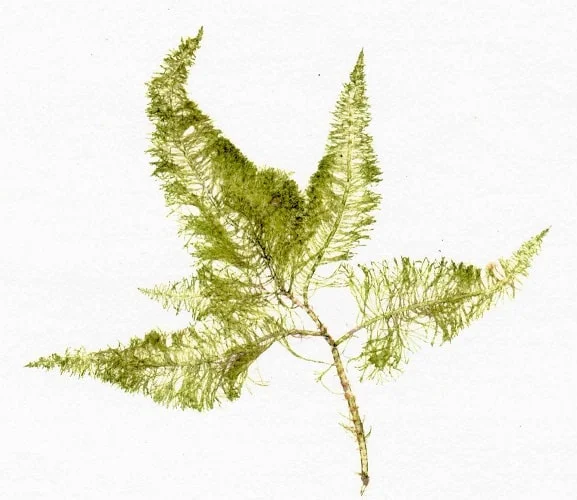
Bryopsis
Briopsis (Bryopsis)
Scientific name: Bryopsis pennata, Bryopsis plumosa Taxonomic type: Siphonous chlorophyte (without cell septa) Water: Exclusively seawater Color: Bright green, emerald green Texture: Feathery, like a small bird feather or sea fern
Appearance: A very aesthetically pleasing algae with a branched, feathery structure reminiscent of a feather or a terrestrial plant. It can be mistaken for an ornamental aquatic plant. It grows on live rock, forming small colonies that expand over time. It feels soft and slimy to the touch.
Is it dangerous?: One of the most problematic algae in marine environments. Extremely resistant to all conventional methods. It contains allelopathic compounds that inhibit coral growth. Once established, it can be very difficult to eradicate.
Related parameters:
- Elevated magnesium (Mg): Paradoxically, there is a documented relationship: very high Mg levels (> 1,500 ppm) can inhibit its growth
- Nutrients: High levels of NO₃ and PO₄ feed it
- Resistant algae: Its siphon-like structure (without partitions) makes it resistant to herbicides and hydrogen peroxide
Main causes:
- Introducing live rock or coral that has not been quarantined
- Sustained High Nutrient Levels
- Low herbivory pressure
How to remove it:
- Manual: Root Pruning — Problem: The cuttings are complete cells and sprout again. They must be removed down to the very last cell; otherwise, they will sprout again.
- Biological:
- Foxface (Siganus vulpinus, S. unimaculatus) — the most effective consumers of Bryopsis
- Tang/Surgeonfish (Zebrasoma spp.) — when hungry, they may eat it
- Hermit crabs — they eat a lot
- Nudibranchs of the genus Elysia — specialists but difficult to care for
- High Magnesium Method: Raise Mg to 1,400–1,600 ppm for 2–4 weeks. Monitor Ca and KH. Corals can tolerate this level temporarily. Controversial, but reported as effective by many aquarists.
- Fluconazole: An antifungal that is also effective against siphoned algae. Dosage: 10–20 mg per 100 L in sump water. Perform a major water change beforehand. Takes time (2–4 weeks). Do not use with sea cucumbers or certain echinoderms. Controversial.
- Hydrogen peroxide: Apply directly to the algae outside the water (on removable decorations) or use a micropipette in the aquarium (very risky with corals).
- Preventive Quarantine: The Best Strategy — Quarantine all new corals and rocks for 4–6 weeks in a separate tank.
Prevention: Strict quarantine of all new material, low nutrient levels, and active herbivores.