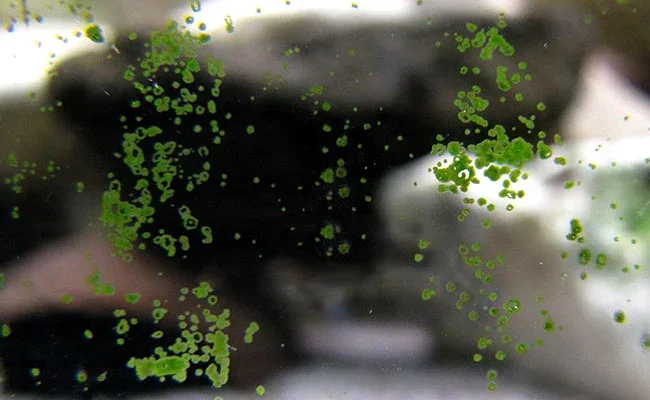
Gsa
Green Spot Algae (GSA)
Scientific name: Coleochaete orbicularis, Choleochaete sp. Taxonomic type: Chlorophyta Water: Mainly fresh water Color: Deep dark green Texture: Hard, sticky, circular, difficult to scrape off
Appearance: Perfectly defined, dark green circular spots 1–5 mm in diameter. Firmly attached to the glass and to the leaves of slow-growing plants (Anubias, Bucephalandra, Java Fern). Does not come off with gentle rubbing; requires a hard scraper.
Where is it found?: Glass (especially on the sides and back), old leaves of slow-growing plants, decorations, and rocks.
Is it dangerous?: For plants, it can block photosynthesis in severely affected leaves, but it is not lethal.
Related parameters:
- Phosphates (PO₄): The most common cause is a PO₄ deficiency (< 0.05 ppm)
- Light: Spots appear more frequently in areas of high intensity
- CO₂: Low CO₂ levels exacerbate
- Water changes: Infrequent water changes allow for buildup
Main causes:
- Phosphate deficiency—paradoxical but well-documented: when PO₄ levels are very low, plants cannot grow, and algae specialized in utilizing residual phosphates proliferate
- Too much light without enough nutrients
- Old leaves from slow-growing plants (very common in Anubias)
- Insufficient CO₂ limiting plant growth
How to remove it:
- Manual: Use a hard steel scraper (not a sponge) on the glass. For leaves: trim the most affected leaves.
- Biological: Nerite snails are the only true specialists in GSA. Neritina natalensis, Clithon corona, Vittina semiconica. 2–3 nerites per 100 L keep the glass clean.
- Adjusting PO₄: Add phosphate fertilizer (KH₂PO₄) to bring PO₄ to 0.1–0.5 ppm. This is often the definitive treatment.
- Light: Reduce the number of hours if it is excessive.
- Chemist: Not required.
Prevention: Keep PO₄ > 0.05 ppm in planted aquariums, keep at least 2 Nerite snails, and trim old Anubias leaves regularly.