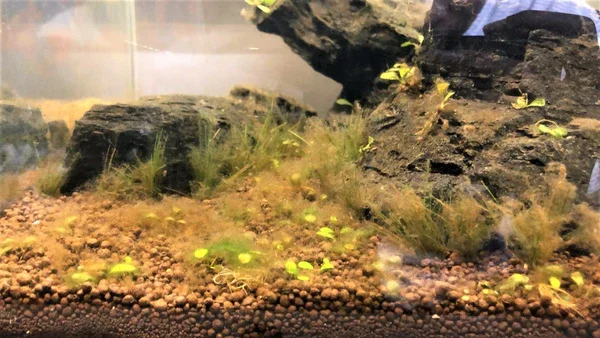
Diatoms
Diatoms (Brown Algae)
Scientific name: Bacillariophyta (multiple genera: Navicula, Nitzschia, Cyclotella) Taxonomic type: Diatom Water: Freshwater and seawater Color: Golden brown, chocolate brown, yellow-ochre Texture: Dusty; comes off easily when rubbed
Appearance: A dusty brown coating that covers glass, decorative items, substrates, and plant leaves. It comes off easily when rubbed with the fingers, leaving a brown stain on the finger. It does not form filaments.
Where does it appear?: Mainly on the front and side panes, on decorations, and on slow-growing plants. Less so in areas with strong currents.
When does it appear?: New aquariums (first 4–8 weeks), after large water changes, when silicate levels are high, or when lighting is insufficient.
Indicates: A new aquarium with the cycling process underway, high levels of silicates (SiO₂), insufficient light, or an inappropriate light spectrum.
Is it dangerous?: No. It is completely harmless to fish, plants, and invertebrates. It is temporary in most cases.
Related parameters:
- Light: Low intensity or a blue-free spectrum promotes diatom growth
- Silicates: High levels (> 0.5 mg/L) are their primary nutrient
- NH₄⁺: Its presence indicates an immature aquarium
- CO₂: Not a determining factor
Main causes:
- New aquarium — lack of mature nitrifying bacteria
- Tap water rich in silicates (especially in areas with hard water)
- Substrates that release silicates (freshly laid quartz sand)
- Insufficient light (< 20 PAR at the bottom)
- Replacing a light bulb or fluorescent tube (an old light loses its spectrum)
How to remove it:
- Instructions: Scrub the glass with a sponge or scraper. It comes off easily.
- Biological: Otocinclus (specialists in diatoms), small plecos, Nerite snails (Neritina natalensis, Vittina semiconica). Amano shrimp also eat them.
- Parameter adjustments: Use reverse osmosis to remove silicates from tap water. Increase light intensity.
- Time: In new aquariums, it disappears on its own within 4–8 weeks, once the aquarium has cycled.
- Chemical: Not necessary; never use chemicals with diatoms.
Prevention:
- Use RO/DI water or osmotic water to avoid silicates
- Proper lighting from the start (full spectrum)
- Patience with new aquariums: It's part of the maturation process