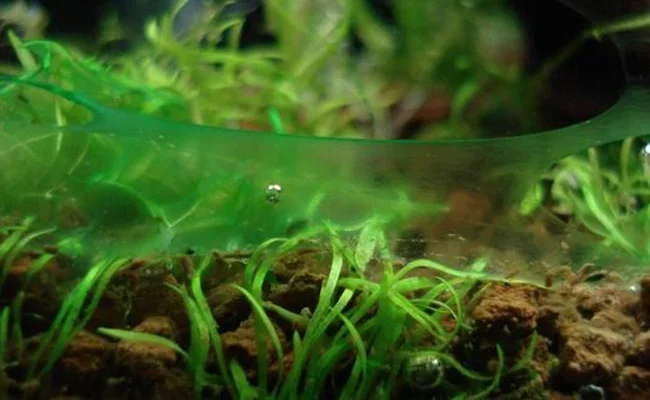
Cyanobacteria
Cyanobacteria (Blue-Green Algae / Cyanobacteria)
Scientific name: Oscillatoria sp., Phormidium sp., Lyngbya sp., Anabaena sp. Taxonomic group: Photosynthetic bacteria (Cyanobacteria) — NOT a true alga Water: Freshwater and seawater Color: Dark green, blue-green, sometimes reddish, brown, or black Texture: Gelatinous, slippery membrane that forms layers or "sheets"
Appearance: A gelatinous, slippery coating that covers the substrate and decorations like a film. It may peel off in whole sheets. It has a very strong, characteristic odor (like wet soil, mud, or even garlic). In severe cases, it covers the entire substrate like a blue-green carpet.
Where is it found?: Substrate (especially areas with little current), decorations, bottom-dwelling plants. In marine aquariums: on live rock and substrate.
Is it dangerous?:
- Some genera produce toxins (cyanotoxins): hepatotoxins (Microcystis) and neurotoxins (Anabaena). In home aquariums, these toxins rarely reach lethal concentrations, but during large blooms, they can affect sensitive fish and shrimp.
- It consumes large amounts of O₂ at night.
- It releases allelopathic substances that inhibit plant growth.
Related parameters:
- Low nitrate levels with relatively high phosphate levels: Cyanobacteria can fix atmospheric nitrogen (Anabaena, Nostoc), so they proliferate when there is little NO₃ available
- Low water flow: Areas with no circulation are the ideal habitat
- Deep, anoxic substrate: Cyanobacteria thrive in substrates rich in organic matter
- High pH: A pH > 7.5 favors certain genera
- Light: It can thrive in both low and high light conditions
Main causes:
- Insufficient water flow (especially at the bottom)
- Excess organic matter in the substrate (overload)
- N:P Imbalance (low nitrate levels relative to phosphate levels)
- Anoxic substrates (very thick layer of sand)
- New, immature aquarium
- Prior treatment with antibiotics that destroyed the nitrifying bacteria
How to remove it:
- Instructions: Use a siphon to remove water during water changes. Repeat for several days.
- Biological: Few animals eat cyanobacteria voluntarily. Some burrowing mud snails (Melanoides) disturb the substrate, preventing their growth. "Malayan trumpet" snails are useful.
- Total darkness: 3–5 days of complete darkness drastically reduces [...]. Cover the aquarium completely.
- Improve circulation: Add a circulation pump directed toward the bottom.
- N:P Ratio: Increase nitrates (NO₃ fertilizers) without increasing phosphates.
- Chemist (antibiotics):
- Erythromycin (0.2 mg/L): Very effective. However, it destroys nitrifying bacteria—monitor NH₃ and NH₄⁺ levels after treatment. Remove sensitive animals. Do not use with invertebrates.
- Clarithromycin or Azithromycin: Milder Alternatives.
- Manual method + darkness: Preferred to prevent damage to the nitrogen cycle.
- Hydrogen peroxide: It can be used at a dose of 1–2 mL per 100 L, with caution.
Prevention: Ensure good water circulation throughout the aquarium (no dead zones), avoid substrates that are too deep (> 5 cm), perform regular water changes, and do not allow detritus to accumulate.