Paludarium
1 topic in this section
Overall difficulty: ★★★★☆ Setup cost: high Recommended minimum size: 60 L Who it's for: advanced (combines knowledge of aquariums and terrariums)
Description
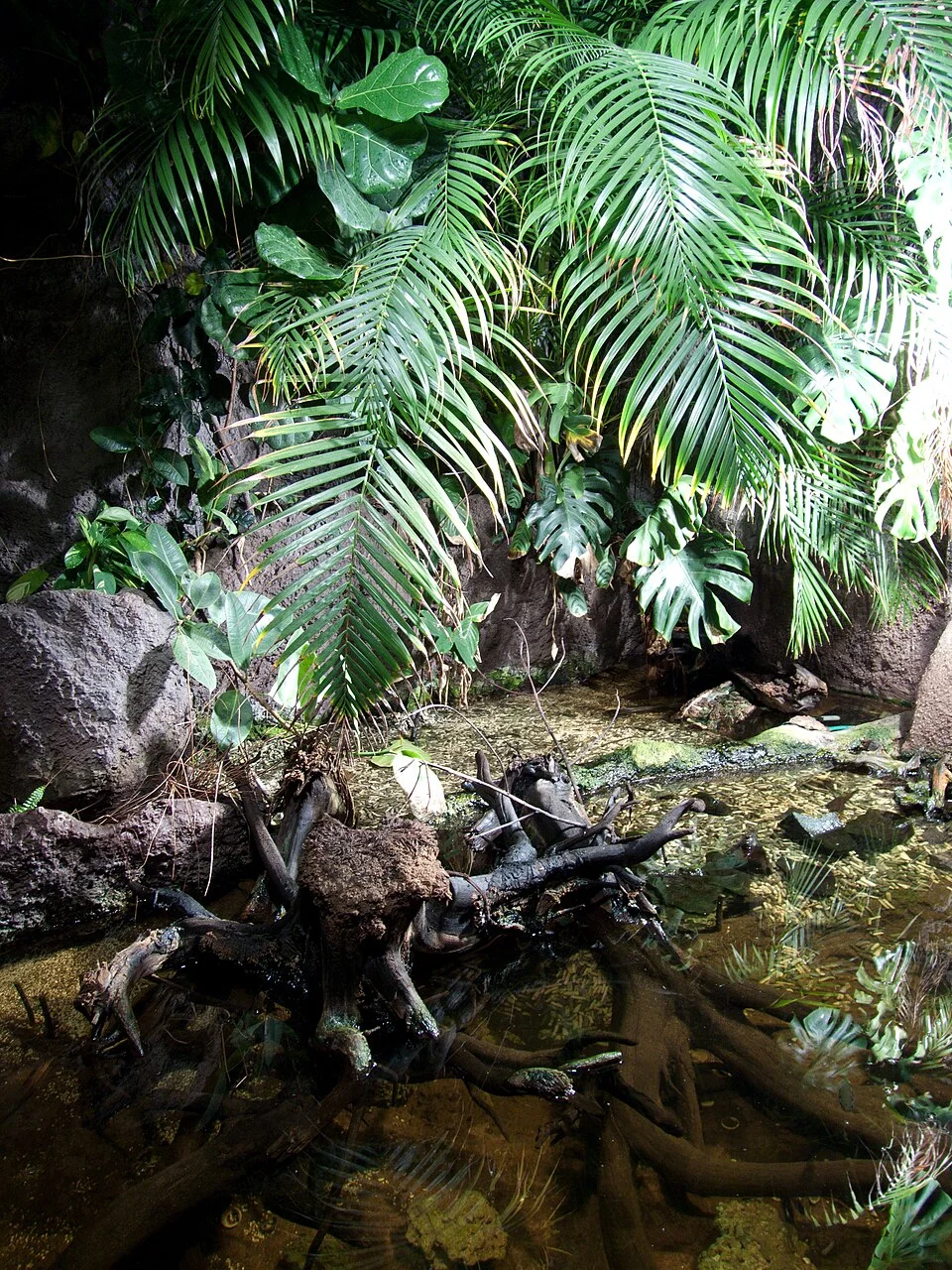
Half aquarium, half terrarium. The above-water section can house tropical plants, mosses, ferns, bromeliads, and terrestrial or semi-aquatic fauna: frogs, salamanders, semi-terrestrial crabs, and geckos. The visual result is extraordinarily beautiful.
Types of Paludariums
| Type | Water-to-soil ratio | Typical Fauna |
|---|---|---|
| Dominant Aquarius | 70% water / 30% soil | Tropical fish + emergent plants |
| Balanced | 50% water / 50% soil | Amphibians, crabs, small fish |
| Dominant terrestrial species | 30% water / 70% soil | Frogs, semi-aquatic geckos |
| Ripario | A stream that resembles a river | Stream fish, bromeliads |
Water Parameters (Aquatic Zone)
| Parameter | Range |
|---|---|
| Temperature | 22–28°C (depending on the wildlife) |
| pH | 6.5 – 7.5 |
| GH | 5–15 °dGH |
| NH3 | 0 ppm |
| NO2 | 0 ppm |
| NO3 | < 30 ppm |
Required Equipment
| Equipment | Specifications |
|---|---|
| Filter | External or submersible (must be quiet) |
| Lighting | Full-spectrum LED for above-ground plants (T5 or horticultural LED) |
| Heater | If aquatic wildlife requires it |
| Humidifier / Nebulizer | To maintain high humidity in the terrestrial zone |
| Ventilation | Vent in the lid to prevent gas buildup and mold |
| Terrestrial substrate | Mixture of jungle soil + perlite + peat moss + gravel |
| Aquatic substrate | Fine sand or gravel, depending on the fauna |
Animals for a paludarium
Amphibians:
- Dendrobatidae (arrowhead frogs): incredible colors; terrestrial, require moisture
- Glass frogs (Centrolenidae): transparent, nocturnal; they live on plants
- European tree frog (Hyla arborea): very active, comes out of the water
- Fire salamander (Salamandra salamandra): semi-aquatic; cold water
Invertebrates:
- Vampire crab (Geosesarma): the terrestrial zone is essential
- Isopods and springtails: the terrestrial micro-cleanup crew
- Earthworms: Soil Decomposers
Aquatic Area of the Paludarium
Fish kept in a paludarium must be able to thrive under the system's conditions (temperature determined by terrestrial plants, high humidity). Dwarf biotope fish (Boraras, Danio margaritatus, cherry shrimp) are the most suitable.
Terrestrial area of the terrarium
- Soil mix: mixture of jungle soil + perlite + peat moss + a layer of gravel
- Isopods: essential for breaking down the excrement of terrestrial fauna and keeping the terrestrial environment free of mold
- Springtails: They break down micro-organic matter
- Houseplants: Bromeliads, ferns, mosses, miniature orchids, Ficus pumila, Peperomia
Common Algae — What They Are, Why They Appear, and How to Get Rid of Them
Brown Algae and GHA
Behavior is the same as in standard aquariums in the aquatic area.
Mold (terrestrial)
It's not algae, but it's the equivalent problem on land. Mold (white fungi) appears on soil and wood when humidity is very high and ventilation is poor. Solution: Improve ventilation (add a vent in the lid). Isopods and springtails actively eat mold. Remove dead wood or leftover food.
Most Common Mistakes
- Building a paludarium without a drainage system or with insufficient filtration
- Do not add isopods or springtails (mold becomes a serious problem)
- Select terrestrial fauna that are incompatible with the system's temperature or humidity
- Do not allow emergent plants to grow (they can block everything)
- Poor ventilation → excessive condensation → widespread mold
Key Tips
- Isopods (Porcellio, Armadillidium) and springtails serve as the "biological filter" of the terrestrial environment: they are indispensable
- The land area must have access to water but also have drainage to prevent excessive pooling
- Bromeliads are perfect for paludariums: they store water in their rosettes (phytorhemes), where frogs live
- A well-designed paludarium requires very little maintenance if the "janitors" (isopods and springtails) are well established
- Photographing weekly progress: paludariums visibly improve over time as the plants grow