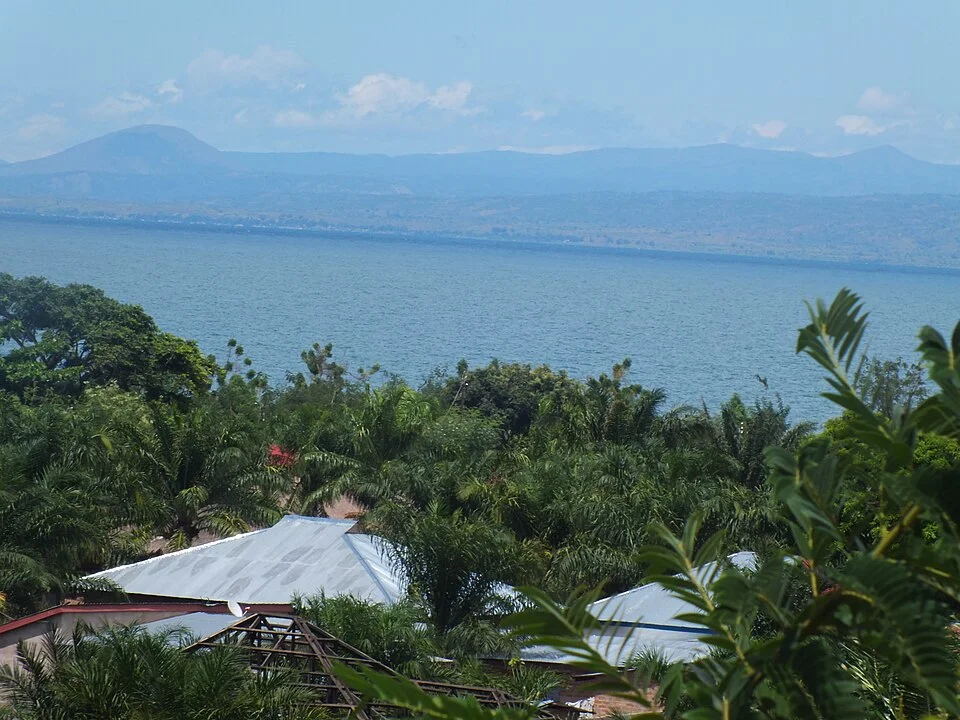
The deepest lake in Africa. Hard, crystal-clear water. Cichlids with unique behaviors: shell dwellers, cleaner cichlids, and Frontosas.
Description
Lake Tanganyika is the second-deepest lake in the world. Its waters are exceptionally clear and mineral-rich. Unlike Lake Malawi, Lake Tanganyika has a much greater biodiversity of ecological niches: rock-dwelling cichlids, sand-dwelling cichlids, shell-dwelling cichlids, and large pelagic fish.
Parameters
| Parameter | Natural value |
|---|
| pH | 7.8 – 9.0 |
| GH | 12–22 °dGH |
| KH | 10–18 °dKH |
| Temperature | 24 – 27°C |
| TDS | 250–400 ppm |
Areas and Species
Rocky Zone (Tropheinae)
| Species | Features |
|---|
| Tropheus moorii | Multiple morphs per lake; highly territorial |
| Tropheus duboisi | Juvenile with white spots; adult black and yellow |
| Julidochromis ornatus | Yellow with black lines; nothing inverted |
| Julidochromis marlieri | Black-and-White Paintings |
| Altolamprologus calvus | Compressed head for entering cracks |
| Neolamprologus leleupi | Bright orange; territorial |
Shell Zone (Neothauma shells)
| Species | Features |
|---|
| Neolamprologus multifasciatus | The smallest cichlid (4–5 cm) |
| Neolamprologus brevis | Smaller than N. meleagris |
| Lamprologus ocellatus | Solitary; extremely territorial with its shell |
| Neolamprologus similis | Colonies in piled-up shells |
Sandy / open area
| Species | Features |
|---|
| Cyphotilapia frontosa | Up to 35 cm; frontal hump; feeds on fish |
| Cyprichromis leptosoma | Pelagic; colorful school of fish in the middle zone |
| Xenotilapia flavipinnis | Sand-sifter, mouth-brooder |
Authentic Decor
- Substrate: Fine white sand + Neothauma shells (or similar land snail shells) for shell dwellers
- Rocks: Flat piles of lake rocks forming horizontal and vertical labyrinths
- No trees, no plants (pure rocky area)
- For the shell zone: Flat sandy bottom with scattered shells, few rocks
Characteristics of the Tanganyika
- The spines of Tanganyika cichlids are more important than their colors in determining their well-being
- Shell dwellers need MORE shells than fish (a minimum ratio of 3:1)
- Tropheus are extremely territorial—they need groups of at least 12–15 to spread out their aggression
- Frontosa: very slow; needs fish that are too large to be eaten; requires a very deep aquarium