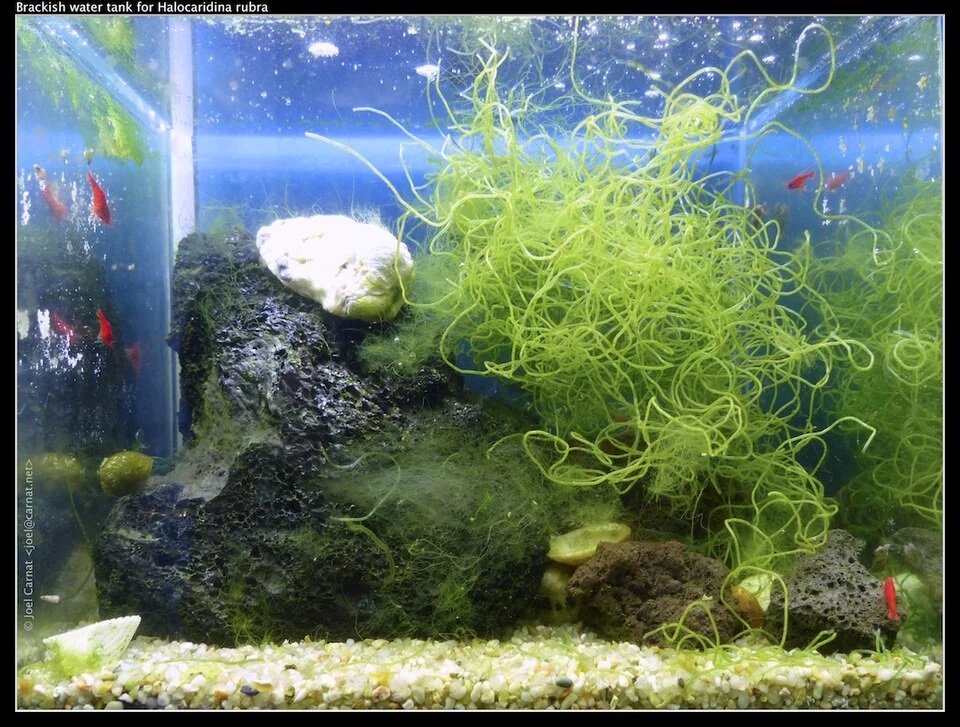
Brackish-water aquarium
1 topic in this section
Overall difficulty: ★★★☆☆ Setup cost: medium Recommended minimum size: 100 L Who it's for: intermediate – advanced
Description
Water with salinity levels between freshwater and seawater. It replicates the ecosystems of estuaries, mangroves, and coastal rivers. It is interesting from a biogeographic perspective: these ecosystems are among the most productive and complex on the planet. Few stores have in-depth knowledge of brackish water, making it a special niche within the hobby.
Water Parameters
| Parameter | Slightly brackish | Moderately brackish |
|---|---|---|
| Temperature | 24 – 28°C | 24 – 28°C |
| pH | 7.5 – 8.5 | 7.8 – 8.5 |
| Density | 1.003 – 1.008 | 1.008 – 1.015 |
| Salinity | 4–12 ppt | 12–22 ppt |
| GH | 12–25 °dGH | 15–30 °dGH |
Required Equipment
| Equipment | Specifications |
|---|---|
| Filter | Powerful outdoor or indoor unit; 6–10x the volume per hour |
| Heater | 2–3 W/L with thermostat |
| Refractometer | To precisely control salinity |
| Lighting | Basic LED; 8–10 hours per day |
| Substrate | Fine sand or gravel |
| Salt | Only aquarium-grade sea salt (Red Sea, Instant Ocean) — NEVER table salt |
Common species
Typical brackish-water fauna
Fish:
- Archerfish (Toxotes jaculatrix): shoots jets of water at insects; 200L+
- Mangrove pufferfish (Tetraodon biocellatus): eats snails; 60L
- Mudskipper / Jumping Goby (Periophthalmus): can walk out of the water; brackish-water aquarium
- Mono / Scat (Scatophagus argus): active omnivore; 200L+
- Platy and Molly (tolerate slightly brackish water)
Invertebrates:
- Mangrove crabs (Cardisoma, Ucides): paludarium
- Freshwater shrimp (Macrobrachium): use with caution (omnivorous)
Plants in a brackish-water aquarium
Few plants can tolerate brackish water:
- Mangroves (Rhizophora): ideal; their roots also filter the water
- Bacopa (tolerates some salinity)
- Java Fern in Low Salinity Conditions
- Halimione (coastal plant; in a paludarium)
Common Algae — What They Are, Why They Appear, and How to Get Rid of Them
Brackish water creates an environment where freshwater and marine algae compete, with unpredictable results.
Brown Algae / Diatoms
The most common at the beginning. Behaves exactly the same as in other aquariums. Goes away on its own.
Cyanobacteria
Very common in brackish water, especially among bottom-dwelling fish such as Scat. High levels of organic matter and warm temperatures promote their growth. Solution: Better filtration. Bottom circulation. Water changes.
GHA (Green Hair Algae)
It can occur when there is an excess of nutrients. Brackish-water fish (Scat, freshwater Otocinclus in low-salinity conditions) partially control it.
Most Common Mistakes
- Do NOT use table salt: use only aquarium-grade sea salt (Red Sea, Instant Ocean)
- Do not gradually acclimate the fish to brackish water (a sudden change in salinity is fatal)
- Assuming that "any fish can tolerate some salt" (false: most tropical fish CANNOT)
- Mixing freshwater fish with saltwater fish, thinking that "brackish water is the middle ground"
Key Tips
- Research the optimal salinity for each species specifically before purchasing it
- Acclimatization to brackish water must be very gradual (increase the salinity over several weeks, not all at once)
- Mangroves are the best "plant" for brackish water: they also filter nutrients from the water
- The archerfish needs an above-water area with plants to display its most interesting behavior
- The brackish water ecosystem is unique: documenting its parameters on a regular basis