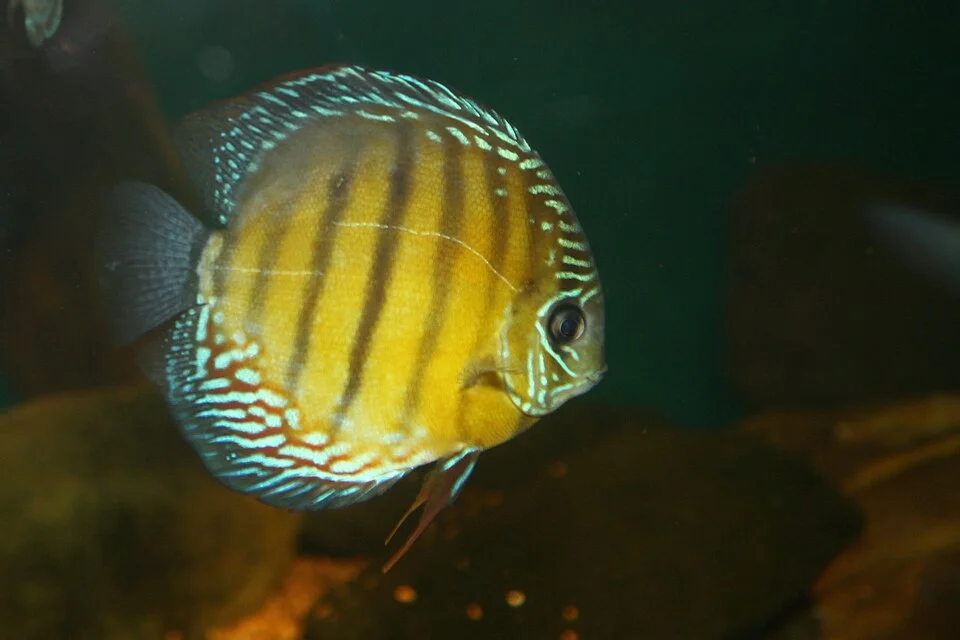
Tropical Freshwater Community Aquarium
1 topic in this section
Overall difficulty: ★★☆☆☆ Setup cost: low–medium Recommended minimum size: 60 L Who it's for: Beginners with a basic understanding of the nitrogen cycle
Description
The most common type of aquarium in the world. It combines several species of tropical freshwater fish that share a similar temperature range and temperament. The goal is to create a stable and visually harmonious community without the demands of an advanced planted tank or a marine tank.
Water Parameters
| Parameter | Range |
|---|---|
| Temperature | 24 – 27°C |
| pH | 6.5 – 7.5 |
| GH | 5–15 °dGH |
| KH | 3–8 °dKH |
| NH3 | 0 ppm |
| NO2 | 0 ppm |
| NO3 | < 40 ppm |
Required Equipment
| Equipment | Specifications |
|---|---|
| Filter | External or internal; 5–8 times the volume per hour |
| Heater | 2–3 W/L with thermostat; reliable brand (Eheim Jäger) |
| Lighting | LED or basic T8; 8–10 hours per day |
| Thermometer | Digital display separate from the heater |
| Substrate | Fine sand or aquarium gravel (inert) |
| Decor | Roots, rocks, natural or artificial plants |
Common Algae — What They Are, Why They Appear, and How to Get Rid of Them
Brown Algae / Diatoms (Bacillariophyta)
Appearance: A brown-ochre powder or film on glass, substrates, plants, and decorations. It looks like dirt. Why does it appear? It is the first type of algae to appear in ALL new aquariums (weeks 1–6). It is caused by excess silicates in the new water, low light levels, and a biological filter that is not yet stable. Is it dangerous? No. It's completely normal and goes away on its own in 4–8 weeks once the nitrogen cycle matures. How to remove it:
- Wait (it goes away on its own)
- Otocinclus (they eat them voraciously)
- Clean the glass with a squeegee
- Vacuuming the substrate during water changes
- Increase the lighting slightly
Green Algae in Glass / Green Spot (GSA — Green Spot Algae)
Appearance: Small, hard green spots on the front glass and on the large leaves of slow-growing plants (Anubias). Why does it appear? A combination of light and low phosphate levels (PO4 < 0.05 ppm). Paradoxically, phosphate levels that are too low promote GSA because plants cannot compete, and the algae take hold. Is it dangerous? No. It's just a matter of aesthetics. How to remove it:
- Metal or magnetic squeegee on the glass (the only effective method)
- Slightly increase the PO4 level in the water
- Nerite snails (they eat them up)
- On Anubias leaves: Remove severely affected leaves
Green Hair Algae / Filamentous Algae (GHA — Green Hair Algae)
Appearance: Green filaments 1–10 cm long that grow from substrates, rocks, plants, and decorations. They resemble hairs or fine moss. Why does it appear? Excess nutrients (NO3 + PO4) combined with intense light. Very common in aquariums that are overcrowded, overfed, or lack vegetation. Is it dangerous? Not directly, but it can cover plants and suffocate them. It's very unsightly. How to remove it:
- Amano shrimp (the most effective: they eagerly devour GHA)
- Remove it manually by twisting in a toothpick or toothbrush
- Reduce feeding and fish density
- Increase the number of plants to compete
- More Frequent Water Changes
- Reduce the photoperiod by 1–2 hours
- Otocinclus (somewhat effective in a short GHA)
Black Algae / BBA (Black Brush Algae — Audouinella / Compsopogon)
Appearance: Black or dark gray strands, 0.5–2 cm long, with a brush-like or dreadlock-like texture. Very tough and difficult to remove mechanically. Appears on the edges of leaves, roots, CO2 diffusers, and decorative items. Why does it appear? In aquariums without CO2: excess organic matter and irregular water flow. In planted aquariums with CO2: CO2 fluctuations (the injected CO2 levels rise and fall instead of remaining stable). Is it dangerous? Not to fish, but it's very persistent and hard to get rid of. How to remove it:
- Add Easy Carbo / Excel directly to the BBA (out of the water using a pipette, or in the aquarium after turning off the filter for 5–10 minutes): the BBA turns red/pink within 48 hours, and then the shrimp and fish eat it
- Amano Shrimp: The Best Feeders in the BBA Once the Algae Starts to Die Off
- Algae-eating Siamese (Crossocheilus oblongus, NOT the false Siamese): the only fish that actively eats live BBA
- Stabilize CO2 levels if the aquarium is planted (the most common cause)
- Hydrogen peroxide (H₂O₂): Apply directly with a pipette (3% pharmaceutical grade); effective but may damage delicate plants
Cyanobacteria ("Blue-Green Algae")
Appearance: A blue-green, green-turquoise, red, or dark brown film or coating that covers the substrate, rocks, and plants. It has a very distinctive odor reminiscent of wet soil or a pond. It peels off in sheets when touched. Why does it appear? It is NOT algae (it is photosynthetic bacteria). Causes: low water movement in areas near the bottom, excess organic matter in the substrate, an imbalance caused by very low nitrate levels and high phosphate levels (an unbalanced N:P ratio), a new aquarium. Is it dangerous? Some species produce toxins that can be dangerous to fish and shrimp in high concentrations. Address the issue promptly. How to remove it:
- Increase water flow in affected areas (point the filter outlet toward the bottom)
- Physically siphon the tank during every water change
- Total darkness for 3–5 days (cover the aquarium completely): cyanobacteria need light
- Erythromycin (antibiotic): very effective, but damages the biological filter → use in a quarantine tank or with great caution
- Diluted H₂O₂ applied directly with the circulation turned off
- Check the water flow: make sure there are no stagnant areas
Green Water (Chlorella Bloom)
Appearance: The water turns an opaque green, like pea soup. The fish are barely visible through the water. Why does it occur? Massive proliferation of single-celled algae in the water (Chlorella, Chlamydomonas). Causes: direct sunlight in the aquarium, excess nutrients, lack of a biological filter. Is it dangerous? Not directly to the fish themselves. But when the bloom collapses, it consumes all the O₂ and can suffocate the fish. How to remove it:
- UV Sterilizer: The most effective and permanent method. UV light kills single-celled algae as it passes through the lamp.
- Move the aquarium away from direct sunlight
- Frequent water changes (50% every 2 days)
- Flocculant (water clarifier): causes cells to clump together so the filter can remove them; temporary solution
Most Common Mistakes
- Adding fish before the aquarium has stabilized (at least 4–6 weeks)
- Mixing species that are incompatible in terms of temperature or behavior
- Overfeeding → accumulation of NO3 → algae
- Failure to change the water regularly
- Buying a common pleco thinking it will always stay small
Key Tips
- Always let the aquarium cycle before adding fish
- Start with a few hardy species (tetras, danios, corydoras)
- A larger aquarium is more stable than a small one
- The filter is the most important part: never clean it with tap water
- The Three-Level Rule: Using the foreground, middle ground, and background helps organize the space and reduce stress