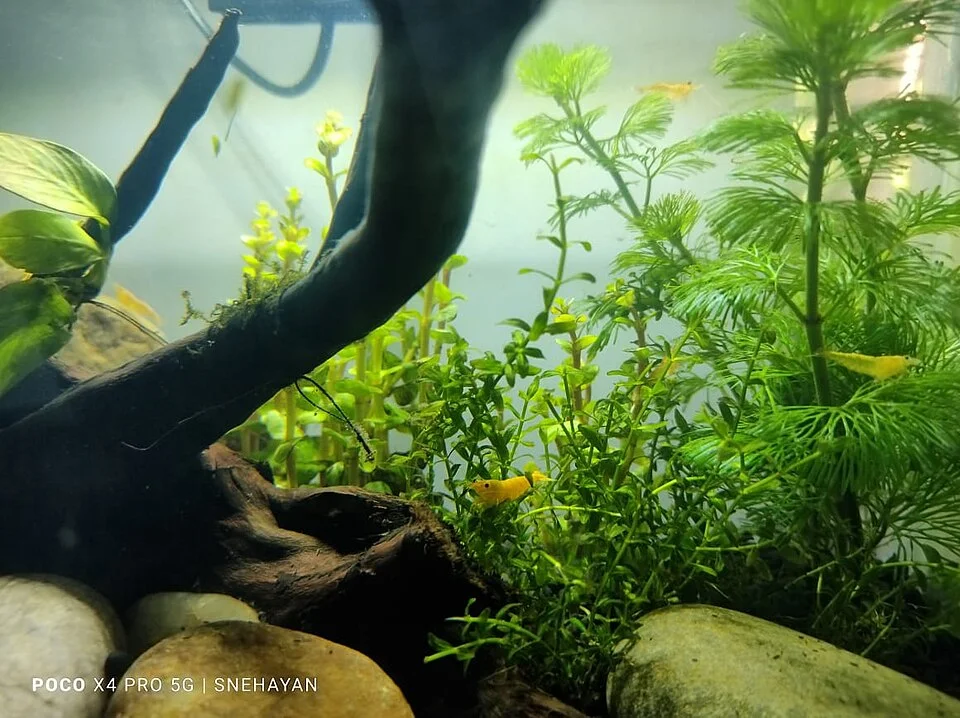
Shrimp Tank
1 topic in this section
Overall difficulty: ★☆☆☆☆ (Neocaridina) to ★★★★★ (Advanced Caridina) Setup cost: low (Neocaridina) – high (Taiwan Bee) Recommended minimum size: 20 L Who it's for: beginners (Neocaridina) – experts (advanced Caridina)
Description
An aquarium dedicated exclusively to ornamental shrimp. The absence of fish keeps the shrimp safe from predators, makes them easy to observe, and allows them to reproduce without losses. The shrimp are incredibly active and fascinating to watch.
Parameters by Shrimp Type
| Type | Temp | pH | GH | KH | TDS |
|---|---|---|---|---|---|
| Neocaridina (Cherry, Blue Velvet) | 18-24°C | 6.8-7.8 | 6-10 | 2-8 | 150-250 |
| Caridina CBS/CRS | 22-25°C | 6.2-6.8 | 4-6 | 0-1 | 100-150 |
| Taiwan Bee (Blue Bolt, Panda) | 22-24°C | 6.0-6.6 | 4-5 | 0-1 | 100-130 |
| Sulawesi Shrimp | 28-31°C | 7.8-8.5 | 4-6 | 2-4 | 100-150 |
Specific Equipment
| Equipment | Recommendation |
|---|---|
| Filter | Only sponge filters (the bubble/airstone type). Never use open-top filters: they suck up the fry. |
| Heater | Only if necessary (Neocaridina don't always need a heater indoors) |
| Neocaridina Substrate | Inert material (sand, gravel): Does NOT alter parameters |
| Caridina Substrate | Active (ADA Amazonia, Tropica Soil, Fluval Stratum): acidifies and softens the water |
| Plants | Java moss (essential), floating plants, Anubias |
| Lighting | Moderate (shrimp prefer less light than fish) |
Molting — the most vulnerable time
Shrimp molt their exoskeleton in order to grow. For 12–24 hours after molting, they are completely soft and vulnerable. If there are fish present, the fish will eat them. That is why an aquarium dedicated exclusively to shrimp is ideal.
Signs of problems during molting:
- Shrimp that molt and die: Low GH, insufficient Ca, copper in the water
- They aren't molting and are growing slowly: old water, TDS too high
Common Algae — What They Are, Why They Appear, and How to Get Rid of Them
Algae in a shrimp aquarium are generally welcome and beneficial.
Brown Algae / Diatoms
Importance for shrimp: Shrimp constantly graze on diatoms—they are their main food source during the first few weeks. The biofilm that grows on the diatoms is essential for their feeding. Remove it? No. It's natural food. Just clean the front glass if it's unsightly.
Biofilm (technically not algae, but it's managed the same way)
Importance for shrimp: Essential. Shrimp spend 80% of their time grazing on biofilm found on rocks, plants, wood, and the substrate. An aquarium without biofilm results in malnourished shrimp and less active breeders. How to enhance it:
- Java moss in abundance
- Wood (releases biofilm as it decomposes slowly)
- Catappa leaves, oak leaves (release tannins and form a biofilm)
- Spinulosa bacteria (some aquarists add powdered bacteria directly to the surfaces)
Green Hair Algae (GHA)
Importance for shrimp: Amano shrimp actively eat it. Neocaridina shrimp graze on it but cannot control it on their own. Excessive GHA can trap small fry and drown them. Solution: Add more Amano shrimp. Reduce the lighting. Perform frequent water changes.
Cyanobacteria
Danger to shrimp: They can be toxic to shrimp if they proliferate massively. They also cover the beneficial biofilm. Solution: Increase water circulation. Keep the tank completely dark for 3–4 days. Use a siphon to remove debris. The shrimp alone cannot control it.
Most Common Mistakes
- Using a sponge filter with excessive power (sucking up tiny fry)
- Copper in water (copper pipes, medications) → lethal even in trace amounts
- Cross Neocaridina and Caridina (the offspring will have dull or wild-looking colors)
- Active substrate in Neocaridina (not necessary and may lower the pH too much)
- Do not use active substrate in Caridina tanks (it is very difficult to maintain the pH without it)
- Add fish that eat shrimp (virtually any fish larger than 3 cm poses a risk)
Key Tips
- A shrimp tank is the easiest to maintain when you follow the basic guidelines (especially for Neocaridina).
- Java moss is essential: it provides a biofilm and hiding places for fry
- Catappa (tropical almond) leaves are the most beneficial "supplement" for shrimp
- Never add medications containing copper to a shrimp tank (or to connected tanks)
- The active substrate for Caridina wears out in 12–18 months and must be replaced